The best way to compare movers in San Marcos, CA is to give every company the same detailed move plan. Include property access, inventory, route assumptions, and special handling needs. Then verify the mover’s license and compare the written estimates line by line.
How San Marcos property access changes the quote
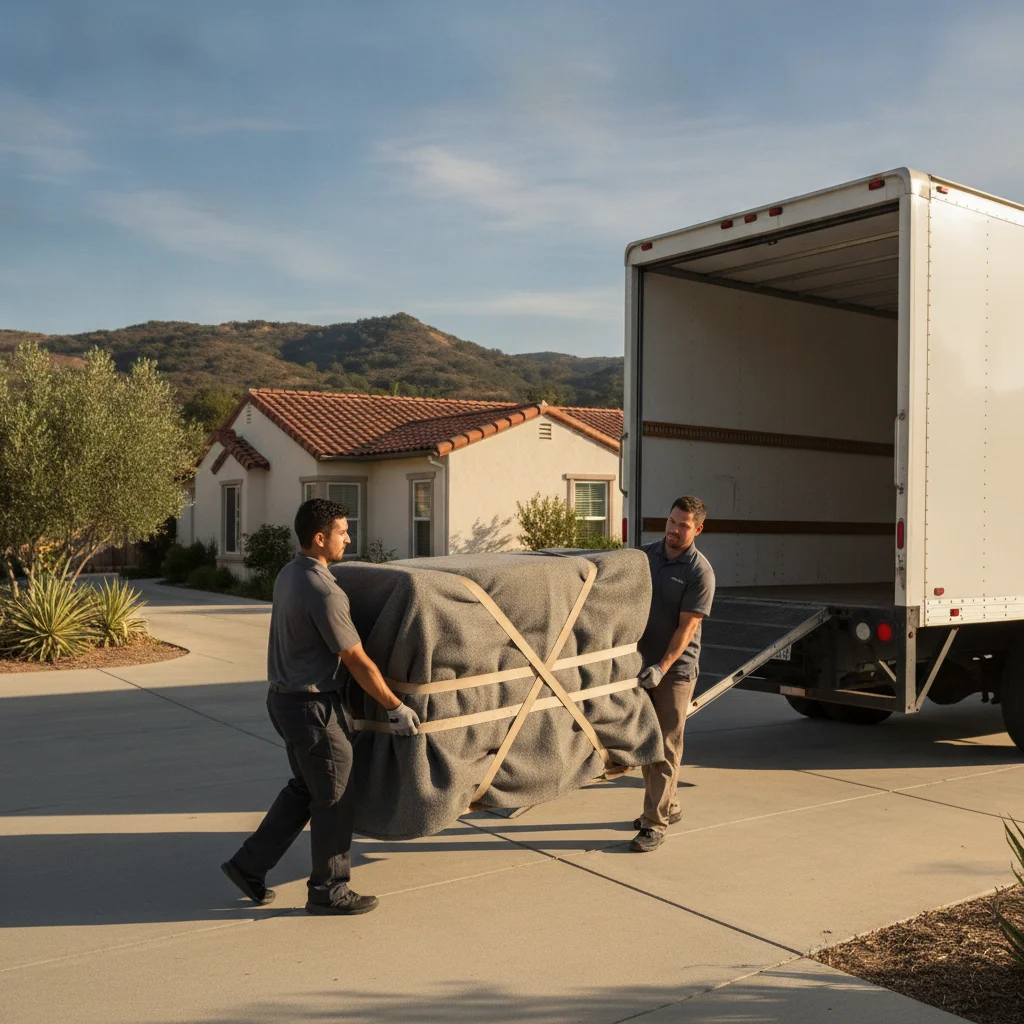
A whole-home estimate needs more than bedroom count and ZIP codes. The mover needs to understand how the crew will reach your belongings. Small access differences can change the labor, equipment, and vehicle plan included in a quote.
Start at the curb and follow the actual carry path. Note where a moving vehicle may park. Measure narrow gates, doorways, halls, and turns. Count every stair section at the pickup and destination. Mention slopes, detached garages, storage rooms, and backyard items.
Don’t describe access as “easy” or “normal.” Those words leave too much open to interpretation. Give each estimator the same measurements, photos, and written notes instead. Ask the property manager or HOA about any access rules that apply to your address. Then share those rules with each mover.
A portable container needs separate attention. The approved research for this page didn’t confirm a San Marcos-specific placement rule, day limit, or fee. Before placing a container, confirm the current requirements with the City of San Marcos planning or code enforcement office. The company providing the container should also explain what placement details it needs.
Ask each mover to state which access conditions appear in its estimate. The document should identify stairs, long carries, elevators, gates, and parking assumptions when those details affect the planned scope. If something is missing, request a revised document before comparing totals.
Our local moving service connects customers with independent local movers. The company you book provides the estimate, sends the crew, and performs the move.
Which pickup details to share before pricing
Build one move brief and send it to every company. This keeps the conversation focused on the same household, access plan, and requested services.
Begin with the full pickup and delivery addresses. Include the type of home at each location. Describe every floor that holds furniture or boxes. If there’s an elevator, ask the building for its reservation process and share the confirmed details. Don’t assume one property follows another building’s rules.
Next, create a room-by-room inventory. List beds, dressers, tables, appliances, patio furniture, garage storage, and packed boxes. Call out unusually heavy, fragile, oversized, or high-value pieces. Include items that may need disassembly or special handling. Photos can help an estimator understand scale, but they shouldn’t replace a written list.
Tell the mover who will handle packing. Separate customer-packed boxes from items the mover is being asked to pack. Identify anything that won’t be moving, even if it appears in a photo or walkthrough. If you plan to donate or sell furniture, don’t remove it from the inventory until that decision is final.
Share the carry-path details from both properties. Include stairs, gates, elevators, parking limits, and the distance between the expected parking spot and the door. If any condition remains unknown, label it as unconfirmed. Ask how the company wants to handle that uncertainty in writing.
Finally, give every company the same requested move date and service scope. Don’t compare one full-service proposal against another company’s loading-only estimate. The total can’t tell you much when the work underneath it differs.
How to discuss SR 78 routing without fixed times
When SR 78 appears in a proposed route, treat it as a planning subject. Don’t ask an estimator to turn a route assumption into a guaranteed arrival time. Instead, ask what the written estimate assumes about travel between the exact addresses.
Provide complete addresses rather than city names alone. “San Marcos to San Diego” doesn’t define the pickup point, destination, property entrance, or final parking location. Exact locations let the mover discuss the route connected to your move.
Ask each company the same route questions:
- Which route does the estimate currently assume?
- Does the written scope separate travel from loading and unloading?
- How will the company communicate a route change?
- Which access details could affect the planned departure?
- What happens to the estimate if an address changes?
A route discussion should stay separate from an arrival promise. Road conditions, access delays, and customer readiness aren’t fixed during an early quote. Ask the mover to document what it can confirm and identify what remains an assumption.
Check the final address details yourself. Confirm building entrances, gate instructions, and the place where the mover expects to park. A map pin may not show the correct entrance or loading point. Give the same corrected information to every company before making your comparison.
If timing matters because of an elevator, lease handoff, or property rule, get that requirement from the responsible building or property contact. Then ask each mover whether its proposed plan can meet the confirmed restriction. Keep the rule and the mover’s response in writing.

How to check the mover’s household mover license
California household movers are regulated by the Bureau of Household Goods and Services, or BHGS. The agency took over household mover regulation from the CPUC in 2018. A moving company isn’t licensed by the CSLB for household moving work.
BHGS calls the authorization a household mover license. Before booking, search the company’s legal name in the official BHGS Household Mover License Search. Don’t rely only on a logo, advertisement, vehicle name, or verbal statement.
Match the search result against the company named on your estimate. Confirm that you’re checking the business that will perform the move, not a similarly named company. The approved research for this page didn’t confirm a required license-number format. Search by the mover’s legal name and review the official record instead of judging a number by its appearance.
The BHGS consumer information page also directs customers to verify that a moving company is authorized to operate. Use that agency guidance for a California move that begins and ends within the state.
Interstate moves follow a separate federal system. If your San Marcos move crosses a state line, check the company through FMCSA’s Protect Your Move resources and verify its federal registration. A company may have authority for one type of move and not the other.
Master Movers San Diego is a referral service. We don’t hold a household mover license or perform moves. The independent mover you select supplies the estimate, provides the crew, and handles the shipment.
How to compare the same scope across written estimates
Put the written estimates side by side. Start with the company’s legal name, pickup address, delivery address, and requested date. A simple error in those fields can mean the documents describe different jobs.
Next, compare the inventory. Check each room, box count, appliance, outdoor item, and specialty piece. Look for items requiring packing, disassembly, or extra handling. Don’t assume an item is included because you mentioned it during a call.
Then review property access. Each estimate should reflect the same known stairs, elevators, gates, carry paths, and parking conditions. Ask for corrections when one document omits a condition listed by the others. An estimate built around incomplete access information isn’t a clean comparison.
Read how each company defines the service scope. Confirm who packs, supplies materials, disassembles furniture, loads, transports, unloads, and reassembles approved items. These are questions for the mover providing the work. Master Movers doesn’t set the mover’s rates, fees, valuation terms, or claim decisions.
Request explanations for unclear charges or conditions. Don’t fill gaps with assumptions. If a fee, rule, or valuation term isn’t clear, ask the company to identify it in the written estimate before you sign.
Also compare cancellation terms, payment instructions, and the process for reporting damage. The mover should explain its own policies and documents. Keep copies of the estimate, inventory, and later revisions together.
Price matters, but it only becomes meaningful after the scope matches. Our guide on how to choose a San Diego mover covers more checks to complete before booking. Your final choice should connect the official license record with a complete written plan for your actual addresses.
When to call us
A whole-home move needs a professional crew when access, heavy furniture, packing, or building rules exceed what you can manage safely. We can help you find an independent company for the confirmed scope. Call us at (858) 400-4069 and we’ll connect you with a permitted local mover.