Furniture disassembly before moving is a scope decision, not a task to leave for pickup. In San Diego, the answer depends on the piece, both carry paths, and who agrees to rebuild it. Set those details in writing before anyone removes a bolt.

Decide what must come apart
Start with a room-by-room furniture inventory. Mark each piece as staying assembled, coming apart, or needing the mover’s review. Don’t decide based on size alone. The shape, removable parts, construction, and route all matter.
Beds, dining tables, sectionals, wardrobes, desks, and shelving need separate decisions. For a bed, identify the headboard, rails, slats, base, and adjustable components. For a table, check whether the legs or base detach. A sectional may have connectors hidden between its units. Desks can include removable returns, shelves, drawers, or cable panels.
Furniture that fits through both properties may not need disassembly. Taking it apart creates more components and hardware to track. A piece that doesn’t clear a doorway, landing, or elevator needs another plan. That could mean partial disassembly, a different route, or help from a specialist.
Check the maker’s instructions when they’re available. Some pieces have an order for removal and reassembly. If the instructions name special tools, replacement fasteners, or a technician, share that information before booking. Don’t expect the mover to infer it from a photo.
An antique, motorized item, built-in unit, or altered piece deserves individual review. Send clear photos and explain any known modifications. A standard furniture quote may not cover unusual components.
Our furniture moving service can connect you with a licensed local mover for the agreed scope. When comparing movers who disassemble furniture, ask about both disassembly and reassembly. One doesn’t automatically confirm the other.
Measure the full carry path first
Measure the furniture before removing anything. Record its height, width, depth, and any sections that extend beyond the main frame. Then measure the entire route at the pickup and destination.
The route begins inside the room. Include the doorway, hall turns, stair landings, railings, gates, elevator opening, and loading entrance. Record the narrowest point. Note ceiling height where a piece may need to turn upright.
Measure openings as they’ll exist during the move. An open door, handle, closer, screen, or security gate can reduce usable space. If you think a door or railing must be removed, ask the owner, landlord, or building manager before adding that step to the moving plan.
San Diego properties create different route questions. A Downtown condo may involve an apartment door, elevator, service corridor, and loading dock. A North Park courtyard move may add a gate and exterior stairs. A Chula Vista townhouse can require several tight turns before furniture reaches the ground floor. Coastal buildings may have garage or alley access instead of a direct curb route.
Don’t stop measuring at the pickup. A dresser that leaves one home intact can still fail at the new bedroom door. Compare both paths before deciding the scope.
Photograph each narrow opening with the tape measure visible. Send those images with the furniture dimensions. If one large piece drives the whole access plan, use our guide to moving one heavy item in San Diego as a second checklist.
Identify hardware, tools, and reassembly responsibility
Assign each task to a person or company before the move. Write down who will disassemble the piece, who will hold its hardware, and who will rebuild it. If another technician is involved, record where that person’s work begins and ends.
Don’t assume a mover brings every tool required by every furniture maker. Send the mover a list of known fasteners and tools. Include hex keys, sockets, screwdrivers, specialty bits, or manufacturer tools already stored with the furniture. If a required tool can’t be identified, say that clearly and ask how the mover wants to handle it.
The same rule applies to reassembly. Confirm whether the mover will rebuild each named piece at the destination. “Bedroom furniture” is too broad. “Queen bed frame with headboard, rails, slats, and center support” gives both sides a clear reference.
Discuss these details for every disassembled item:
- Who removes drawers, shelves, doors, legs, or brackets
- Who disconnects motorized or adjustable components
- Who supplies tools, bags, labels, and protective materials
- Where hardware stays during transport
- Which room receives the rebuilt item
- What happens when instructions or hardware are missing
If you plan to do part of the work, give the mover an accurate status. A half-disassembled wardrobe isn’t the same scope as an intact one. Loose panels, unfinished steps, and unidentified hardware should be disclosed before pickup.
A search for a furniture disassembly service in San Diego may produce different service descriptions. Compare the actual written tasks, not the headline. Also confirm the company in the BHGS household mover search before booking an intrastate California move.
Record condition and label every component
Create a condition record before disassembly starts. Take wide photos of the full piece, then photograph corners, joints, surfaces, hardware locations, and existing marks. Capture the front, back, and underside when accessible. These images give you and the mover the same visual reference.
Photograph each assembly step in reverse. Start while the furniture is intact. Take another photo after removing each major section. The sequence can help identify where rails, brackets, washers, and supports belong during reassembly.
Give every piece a simple item name. “Primary bedroom bed” is clearer than “bed parts.” Use the same name on the inventory, component labels, hardware bag, and destination room plan. If two similar items are moving, add a distinguishing detail such as “window-side nightstand.”
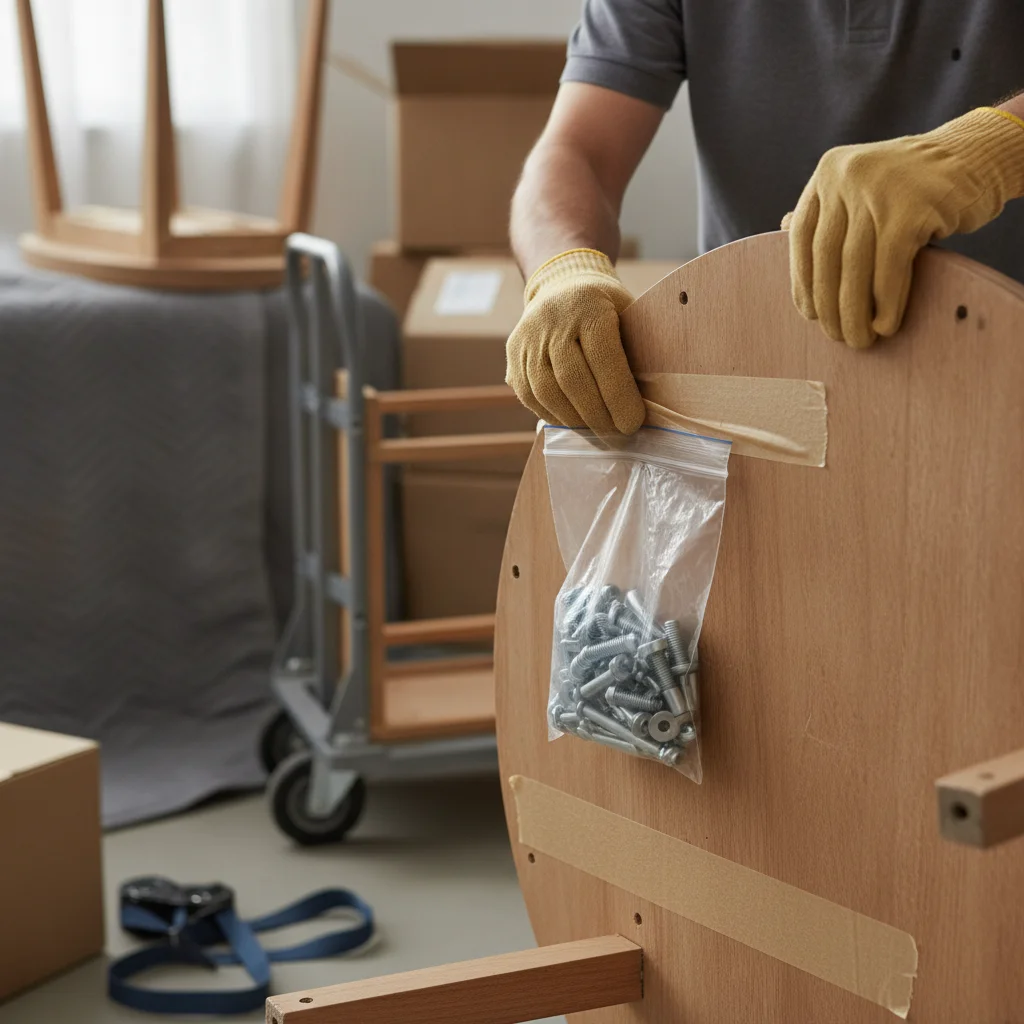
Keep hardware grouped by item. Separate bags prevent bolts from unrelated furniture from becoming mixed. Note the quantity and hardware type before sealing each bag. If a bolt returns to its original opening for transport, record that choice in the photos and inventory.
Label components in a way that matches the reassembly sequence. Terms such as “left rail” can become confusing after a piece changes orientation. A room name plus an ordered component number gives the mover a clearer reference.
Don’t hide missing parts. Mark absent fasteners, damaged connectors, stripped openings, or incomplete instructions in the condition record. Then ask the mover whether reassembly remains within the agreed scope. If replacement parts are needed, confirm who will obtain them before the move.
Store the photo set somewhere available at both addresses. Keep the furniture inventory with the written estimate and building information. That creates one working record for the owner, mover, and any separate technician.
Put the agreed scope in the written estimate
Ask the mover to identify disassembly and reassembly in the written estimate. Each major item should have enough detail to prevent different interpretations. A single line saying “furniture service” doesn’t show which pieces come apart or who rebuilds them.
For each item, record its name, current location, destination room, planned disassembly, and planned reassembly. Add known access limits and any specialty tools. Attach photos when the mover accepts them as part of the job record.
The written scope should answer practical questions:
- Is the item moving assembled, partly disassembled, or fully disassembled?
- Which party handles each stage?
- Are tools, labels, hardware bags, and packing materials part of the mover’s scope?
- Does the quoted price include the listed disassembly and reassembly tasks?
- How will added work be approved if measurements or furniture details change?
- Who handles missing, damaged, or unidentified hardware?
- Does the mover exclude any motorized, attached, or specialty components?
Read the furniture wording alongside the inventory. Confirm that the item names match. If “bed frame” appears in one document and “bedroom set” appears in another, ask the mover to clarify the final scope.
Share building restrictions separately. An elevator reservation, loading-area rule, or property access limit can affect when furniture work occurs. Don’t assume the building will permit doors, railings, or fixtures to be removed. Get that answer from the property manager responsible for the site.
Review the final plan again if the destination changes. A different unit, elevator, staircase, or bedroom can change the disassembly decision. Send updated measurements and photos before the mover confirms the revised scope.
For more information about choosing an intrastate mover, read the BHGS consumer guidance. It identifies BHGS as California’s household mover regulator. The mover you hire holds the license and performs the physical work.
When to call us
A professional crew is a sensible choice when furniture is bulky, access is tight, or several pieces need documented disassembly and reassembly. Call us at (858) 400-4069 and we’ll connect you with a licensed local mover.