Hiring movers for a household wine collection starts with one question: will this company accept the bottles at all. A wine rack is not a dresser. Acceptance, packing, custody, and placement each need a named owner before anyone lifts a case.
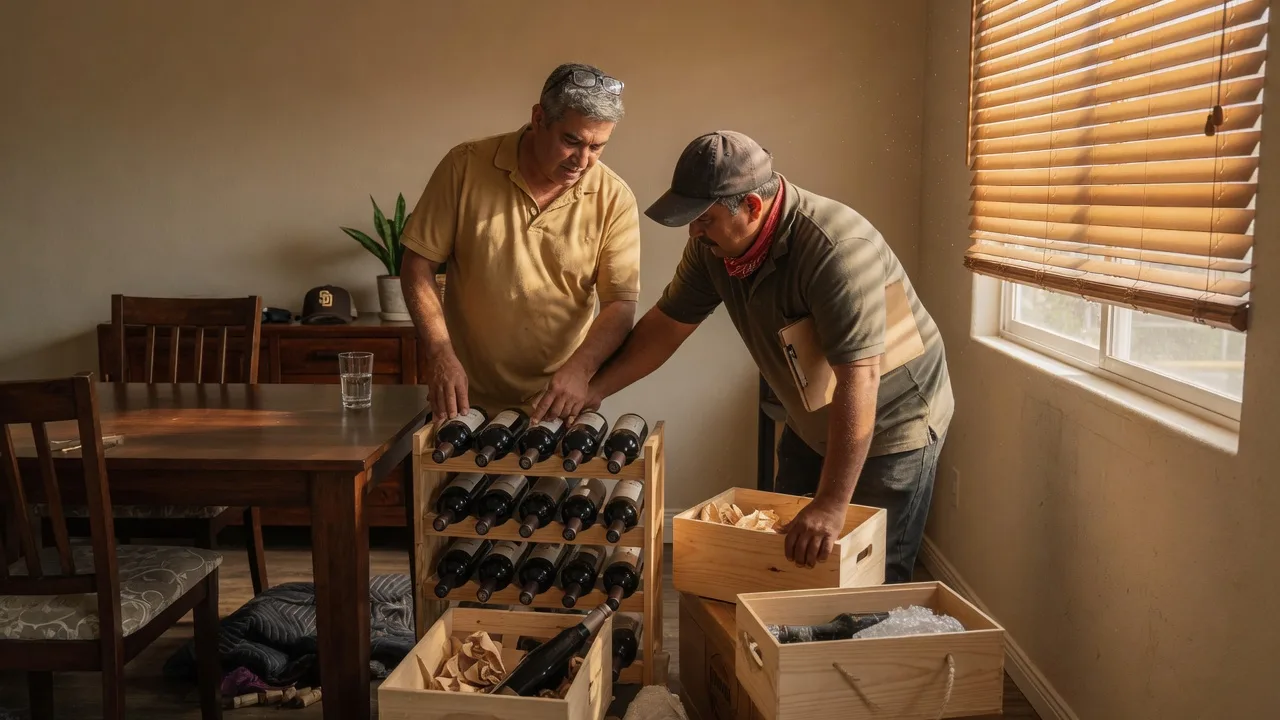
Record the collection and its current condition
Count bottles, boxes, and any built-in rack the mover might be asked to move. Photograph the rack in place, including scratches, loose joints, and the path out of the room. Don’t invent bottle values on the inventory. If you have purchase records, keep those with you. The mover’s inventory is a handling list, not an appraisal.
Note whether bottles sit in a closet, a garage, a hillside cellar, or a climate-controlled cabinet. A La Jolla dining-room rack and an El Cajon garage shelf are different access jobs even when the bottle count matches. Describe the actual room.
Separate the rack, the bottles, and any cooling equipment. A compressor, a dedicated outlet, or a built-in cabinet may be a furniture move, an appliance question, or an exclusion. Ask. Don’t assume one crew takes all three.
A specific alcohol-transport statute for household wine collections could not be confirmed in this site’s claims ledger, so no licensing number is stated here. Ask the mover what it accepts. Confirm any remaining legal question with the agency that actually regulates that company.
Review the items movers may not accept before you add liquids, glass, or perishable goods to a request. Then ask about the actual bottles.
Ask whether the mover accepts the collection
Get a yes, a no, or a conditional yes in writing. “We’ll be careful” is not acceptance. Ask whether the quote covers bottles, empty racks, full racks, or only furniture around the collection.
If the mover declines, that is a usable answer. You can then assign bottles to a staff vehicle, a specialty carrier, or a stay-behind plan. Master Movers San Diego does not handle the collection and does not promise that any matched mover will take wine.
Custom crating in this market often runs $150 to $450 when a mover offers it. That is a market band, not a brand price and not a promise that crating is available. If you want a crate, ask whether the mover supplies it, whether you supply it, and what the crate is for.
The piano and specialty moving service is the booking path when the job includes other hard-to-move household pieces. Wine still needs its own line on the estimate.
Confirm who provides packing or specialty containers
Name the person who packs each bottle. Options are the owner, a packing crew the mover writes into the scope, or a third specialist. Don’t leave “someone will wrap the wine” on a family text thread.
Ask what materials the quote includes. Cellar boxes, cardboard dividers, and a crate are different SKUs. If the mover will not pack liquids, write that the owner packs and the mover only carries sealed cartons. If the mover will not carry liquids even when boxed, write that too.
Temperature control, humidity, and “white glove” transit are not claimed here. Those services exist in other markets. This ledger does not verify that any San Diego household mover offers refrigerated wine transit. If a candidate describes a special vehicle, ask for that description in the estimate. Don’t treat a marketing page as the contract.
Framed art has a similar “ask before you assume” pattern. The framed art preparation guide is useful for packing questions that are not about bottles.
Map pickup and placement access
Measure the path from the rack to the truck and from the truck to the new rack location. Record stairs, iron railings, tight turns, and elevator cabs. Coastal condos from Pacific Beach to downtown often add a freight elevator reservation. Hillside homes in Mission Hills or Mount Helix can add a grade. Confirm the address. Don’t copy a neighbor’s story.
Ask the destination where the rack will sit. The mover should not choose a final wall while holding glass. If a cooling unit needs a dedicated outlet, that is an owner or electrician task unless the written scope says otherwise.
Building rules are separate from the mover’s scope. Confirm loading hours, floor protection, and parking with the HOA or property manager. City curb rules in the City of San Diego are posted on the block. Yellow commercial loading is not a reserved personal space.
Put handling and custody responsibilities in writing
The estimate should say more than “move wine.” Attach the bottle count, rack dimensions, condition photos, origin path, destination room, and who holds the bottles overnight if the move spans two days.
Ask the mover to state whether its work includes packing, crating, lifting, transportation, unloading, or placement. Record who has custody at each handoff. If the owner keeps high-value bottles in a personal vehicle, say so. Those bottles should not appear as if they were on the truck.
For a California-only household move, verify the legal name in the BHGS Household Mover License Search. Read BHGS consumer information before you sign. Interstate valuation figures such as released value at 60 cents per pound per article apply only when the federal household-goods regime covers the shipment. They are a poor fit for a bottle whose value is not its weight. Ask the mover which regime applies.
Any price change must come from the independent mover, not Master Movers San Diego.
When to call us
Call when the collection is large enough, fragile enough, or awkward enough that you want a licensed mover to state a written yes or no. Call (858) 400-4069 and we’ll connect you with a permitted local mover.