Pickup day gets confusing when a San Diego home becomes a row of similar boxes. An interstate moving inventory checklist ties each carton and large item to a condition record. Build it before anyone carries the first piece outside.
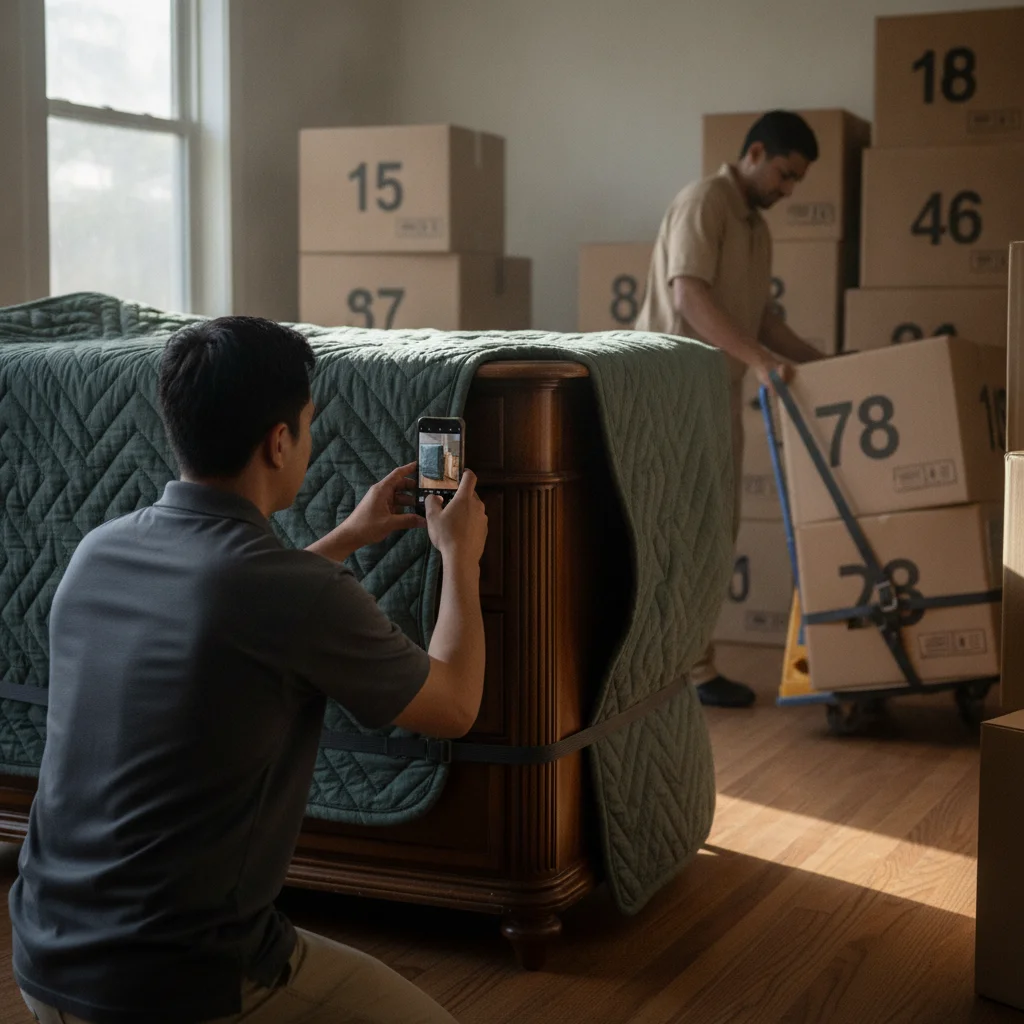
Build a complete inventory before pickup
Your personal inventory and the mover’s paperwork serve different purposes. Your list helps you recognize, count, and track your belongings. Keep it even if the mover creates a separate inventory at pickup.
Assign one unique ID to every carton and unpacked item. Use short room codes followed by numbers, such as KIT-01 or BR2-07. Large furniture needs IDs too. A dining table, television, bicycle, and floor lamp shouldn’t disappear into a general “furniture” category.
Track these details in a spreadsheet or notebook:
| Field | What to record |
|---|---|
| Item ID | Your unique box or furniture number |
| Origin | Room or storage area |
| Contents | A useful summary without private details |
| Condition | Existing scratches, dents, stains, or missing parts |
| Photo reference | Matching image or video filename |
| Destination | Room at the new home |
| Status | Loaded, delivered, missing, or damaged |
Use a separate line for an item that needs individual attention. Don’t bury a valuable camera inside an entry labeled “office supplies.” For ordinary cartons, name the main contents and destination room.
Build the list in the same order you’ll walk through the home. A Downtown condo list might follow the elevator staging area. A Poway house might separate bedrooms, garage storage, and patio items. This structure makes pickup and delivery counts easier.
Print one copy and keep a digital copy away from the shipment. If you still need help planning the carrier side, our long-distance moving service connects San Diego customers with independent movers.
Photograph condition without exposing private records
Condition photos should show what an item looked like before pickup. Start with a wide image that identifies the room and item. Then take close shots of corners, surfaces, legs, handles, screens, and existing damage.
Use the inventory ID in every photo sequence. You can place the label beside the item or include it at the start of a short video. A filename such as LR-04-before-01.jpg is easier to match than a phone’s automatic image number.
For furniture, capture all visible sides before wrapping. Open doors or drawers only when they’re empty and safe to handle. Photograph removable shelves, hardware bags, and power cords beside the matching item. For electronics, record the maker, model, and serial number when that information matters to your household record.
Keep private information outside the frame. Don’t photograph passports, financial statements, medical paperwork, account numbers, passwords, or readable family records. If a receipt or serial label is needed, take a tight image and store it separately from general room photos.
A slow video can provide context that individual images miss. Walk around the item without rushing. State the inventory ID, room, and visible condition. Avoid filming unrelated documents or computer screens in the background.
Keep the original files. Create a backup that isn’t stored only on the phone traveling with you. Before loading begins, check that the images open and match the correct IDs. A photo is less useful when nobody can connect it to the item on the list.
Separate valuables and family-held essentials
Some belongings need two records: an inventory entry and a plan for who keeps them. Start a family-held list for passports, medications, keys, travel documents, lease or closing papers, and devices needed during the trip. Put these items in bags that won’t enter the packed shipment.
Assign each family-held bag to one person. Record who has it and where it should remain during stops. Don’t use a carton that resembles the mover’s boxes. A distinct suitcase or backpack reduces the chance of it entering the loading area.
Create another section for high-value belongings that will travel in the shipment. Federal interstate rules define an article of extraordinary value as an item worth more than $100 per pound. Examples in the federal material include jewelry, silverware, china, antiques, rugs, furs, and computer software.
Interstate movers may limit their liability for these articles unless the shipper specifically lists them on the shipping documents. Give the mover written notice and verify that each listed article appears where it should. Keep a copy with your personal records.
Don’t treat the high-value list as a substitute for your valuation election. Full Value Protection and Released Value are different options between you and the interstate mover. Our guide to Released Value versus Full Value Protection explains the verified federal figures.
Avoid putting detailed descriptions of jewelry or sensitive records on labels visible from outside. The carton ID can point to a private inventory entry instead. Your working list only needs enough visible information to route each piece correctly.
Reconcile inventory forms at pickup and delivery
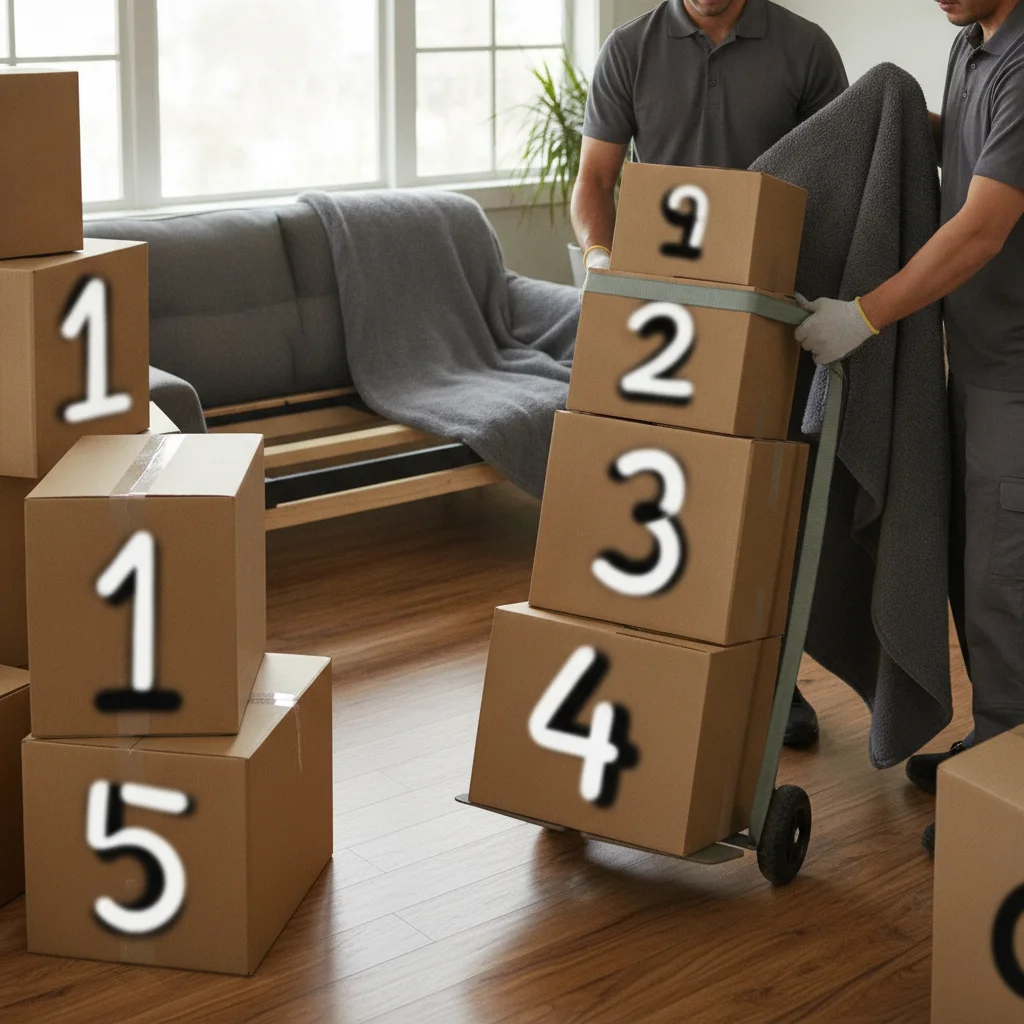
Before loading starts, compare your count with every inventory form the mover asks you to review. Keep your own IDs in place. If the mover adds barcode stickers or separate numbers, record both identifiers on the same line.
Read any condition codes or abbreviations before initialing them. Ask the mover to explain terms that aren’t clear. Compare the written condition with your photos and the item in front of you. Correcting a mismatch is easier while everyone can still inspect the piece.
Use a simple pickup routine:
- Call out the homeowner inventory ID.
- Match it to the mover’s label, if one is added.
- Mark the piece as loaded.
- Save a clear copy of the pickup paperwork.
- Record any item intentionally left behind.
Have the list ready before a scheduled elevator or loading-dock period begins. That matters for moves leaving Downtown or other buildings with controlled access. Trying to create records beside an active loading path invites mistakes.
At delivery, reverse the process. One person can call out incoming IDs while another directs each piece to its destination room. Mark an item delivered only after you identify it. Don’t count a group of similar cartons from across the room.
Compare furniture condition as it arrives. Record visible loss or damage on the documents provided by the mover, then photograph what you observed. Save images of damaged packaging when it’s reasonable to keep it.
Ask the mover in writing how to submit a claim and which deadline applies. No universal claim deadline is stated here because a verified figure wasn’t available from a primary source. Check the mover’s shipping documents and current FMCSA consumer guidance instead of relying on a generic online timeline.
Keep estimates and inventory records together
Create one move folder before requesting or accepting documents. Use the same folder structure on your computer and in a paper binder. That keeps the long-distance moving inventory, carrier information, and signed records connected.
A practical folder can contain:
- The mover’s estimate and later revisions
- The mover’s federal registration information
- Your master inventory spreadsheet
- Original condition photos and videos
- Written notice of high-value articles
- Pickup documents and signed copies
- Delivery records and condition notes
- Emails or messages about changes
Name files by date and purpose. For example, pickup-inventory-signed.pdf is clearer than scan004.pdf. Don’t overwrite earlier versions when a document changes. Save the new copy with its own date so you can follow the sequence.
For an interstate household goods move, the mover’s estimate includes notice of two liability options: Full Value Protection and Released Value. Federal rules set Released Value at 60 cents per pound per article, with no charge to the shipper. Under the regulation’s example, liability for a lost 10-pound stereo would be no more than $6.
The federal minimum valuation used to determine the cost of Full Value Protection is $6 per pound multiplied by the shipment’s weight. A mover may use a higher minimum, or the shipper may declare a higher value for an additional cost. These figures apply to interstate household goods moves under FMCSA rules. They don’t describe California-only moves regulated by BHGS.
Match your signed valuation choice to the final estimate and shipping records. The election is between you and the mover. Master Movers San Diego doesn’t set the valuation, carrier terms, or claim result.
Before booking, use FMCSA’s Protect Your Move resources to check the mover’s current USDOT registration record. Save the result with your estimate. A California household mover may have state authority, federal authority, or both, so verify the authority needed for the move you’re making.
When to call us
A professional crew makes sense when an interstate shipment covers multiple rooms, specialty furniture, or controlled building access. Prepare your inventory first so the mover can review the shipment clearly. Call us at (858) 400-4069 and we’ll connect you with a mover registered with FMCSA for interstate household moves.