Choosing La Jolla movers starts with the space between your door and the truck. A steep driveway, shared entry, or distant parking spot can change the equipment and labor needed. Give moving companies clear access details before comparing their quotes.
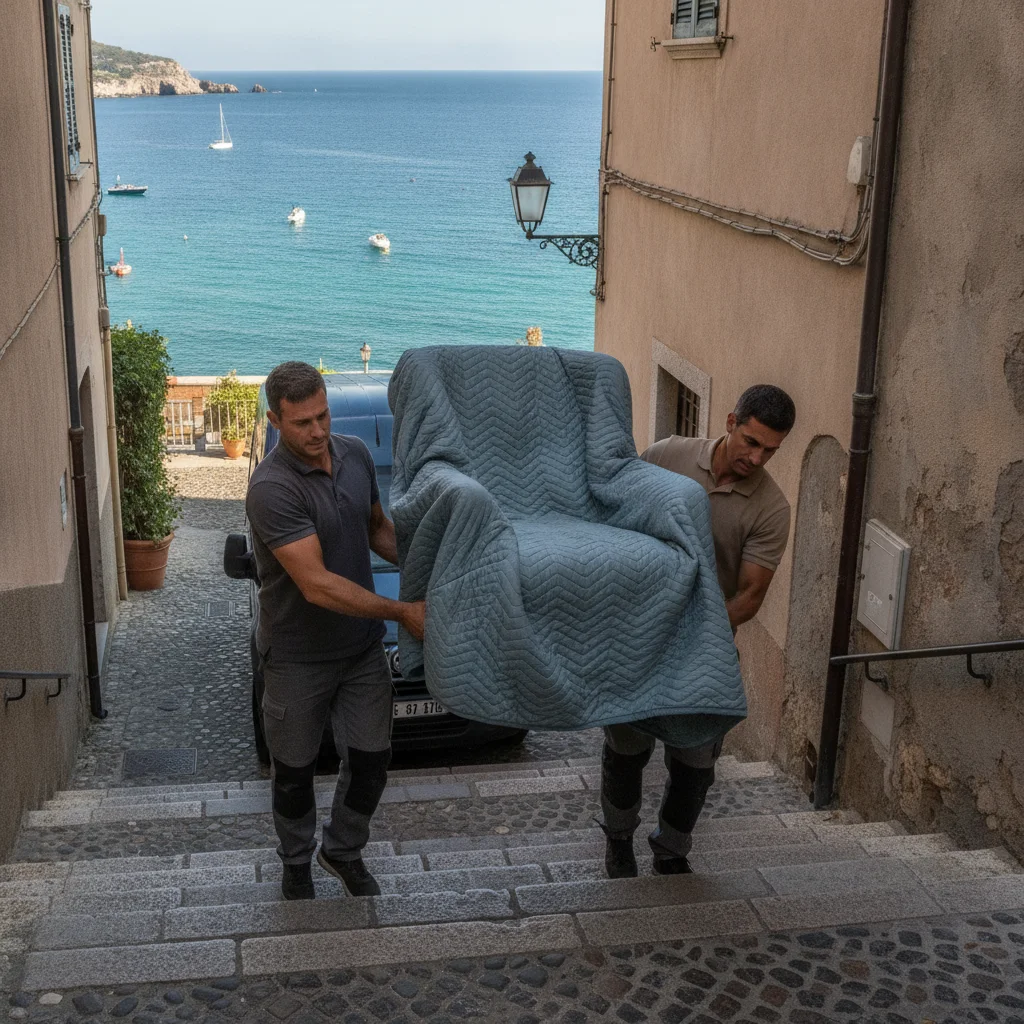
Why La Jolla streets decide the length of your move
Truck access affects almost every trip between the home and the loading area. A nearby parking spot creates a short carry. Parking farther away adds sidewalks, gates, steps, and repeated turns to each trip.
That difference matters around the Village, La Jolla Shores, Windansea, Bird Rock, and hillside homes near Mount Soledad. The same furniture list can create very different access plans in those settings. A ground-floor home with a level driveway isn’t the same job as a condo above a shared garage.
Start by tracing the route from the street to each room. Count exterior and interior stairs. Note narrow landings, low branches, sharp corners, and gates. Tell the mover whether the path crosses a shared courtyard or another resident’s parking space.
Approach routes matter too. Explain whether the address is reached from Torrey Pines Road, La Jolla Boulevard, Prospect Street, or a smaller connecting street. Don’t choose the truck position yourself. Give the moving company photos and measurements, then let its driver assess the workable setup.
Curb availability also needs direct confirmation. The City of San Diego bulletin we checked covers storage containers in the public right-of-way. It doesn’t establish a blanket parking rule for moving trucks. Check posted signs, temporary restrictions, and current city requirements instead of assuming an open curb is available.
When comparing La Jolla moving companies, ask how each one used your access information. A quote based only on room count may miss the part of the move happening outside the home.
Hillside driveways, tight turns, and where a truck actually fits
A driveway can look open from the garage and still be difficult from the street. Its slope, entrance angle, overhead clearance, and turning space all affect the mover’s plan. Parked cars can also change the approach between the estimate and moving day.
Photograph the driveway from both directions along the street. Include the curb, gate, garage, retaining walls, and any tight bend. A short video walking from the road to the front door can show details that a single photo misses.
Measurements are more useful than labels such as “tight” or “steep.” Record the gate width, lowest overhead point, narrowest walkway, and number of steps. If you can’t measure safely, say that clearly. The moving company can decide whether an on-site look is needed before finalizing its plan.
Some homes may need a smaller vehicle, a different parking position, or a longer carry. Those decisions belong to the licensed mover you hire. Don’t promise access across a neighbor’s driveway or assume the truck can block a shared lane.
Walk the route with large furniture in mind. A sofa might clear the front door but fail at an exterior turn. A wrapped table may need more room than its bare dimensions suggest. Flag glass doors, railings, planters, and uneven transitions so the mover can choose suitable handling equipment.
Our local moving service connects customers with independent local movers. The matched company performs the move, selects the equipment, and sets its own terms. Confirm the final access plan directly with that mover.
Coastal condo buildings and shared entries
Condo access begins before the truck reaches the curb. The mover may need instructions for a loading area, garage entrance, service elevator, lobby, stairwell, or controlled gate. Your building’s management sets those property rules.
Ask management for the current moving procedure in writing. Find out which entrance movers should use and who provides access. Confirm whether the building requires an elevator reservation, protective materials, a certificate of insurance, or a refundable deposit. We couldn’t confirm one rule that applies to every La Jolla building, so the property manager or HOA must provide the requirements for your address.
Send those instructions to the mover before accepting a quote. A company can’t plan around an elevator restriction it hasn’t seen. If the garage has posted clearance information, photograph the sign rather than copying the measurement from memory.
Shared entries create another layer. Residents may need access while furniture passes through the lobby or courtyard. Tell the mover about locked doors, call boxes, key fobs, and doors that can’t remain open. Identify the person authorized to handle building access during the move.
Our guide to HOA, certificate of insurance, and elevator rules explains what to request from management. Renters can also use the San Diego apartment moving guide to organize entry, parking, and unit access.
The cleanest plan puts building rules, access contacts, and mover instructions in one message. Everyone then works from the same information.
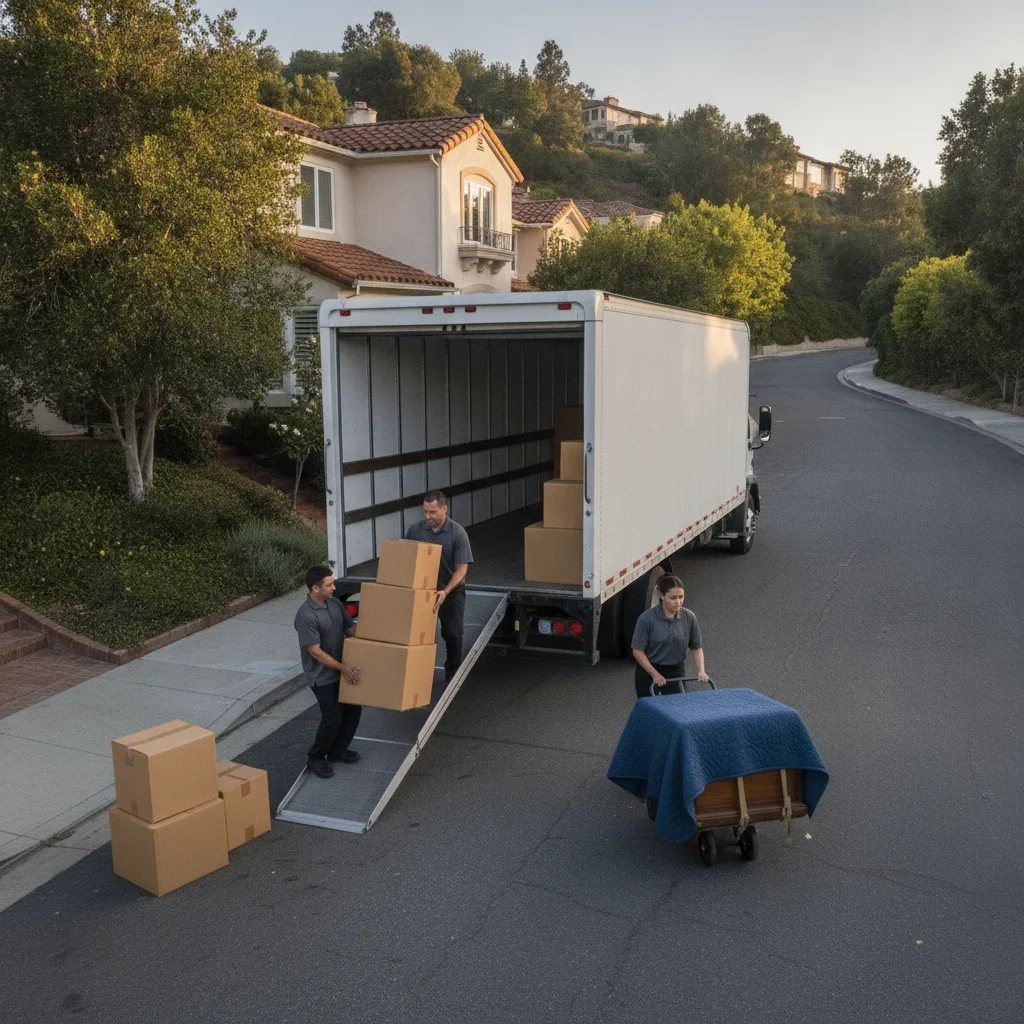
What to sort out with the building or the neighbors first
Begin with anything you don’t control alone. That includes shared driveways, assigned parking spaces, private lanes, courtyard gates, and building elevators. A verbal understanding can be forgotten, so keep approvals and instructions in writing.
Ask the property manager or HOA which areas the mover may use. Request the current procedure for reserving shared facilities. If another resident’s vehicle affects the route, speak with that person before moving day. Don’t assume a parking space becomes available because furniture needs to pass through it.
For a detached home, check whether gardeners, deliveries, construction, or waste collection could occupy the planned loading area. The mover should still approve the final truck position. Your role is to identify predictable conflicts and share them early.
Keep access tools together. Place gate remotes, entry codes, elevator keys, and required documents with the person coordinating the move. Don’t pack them in a box. If a landlord or building representative must open an area, confirm who will be present and how the mover should reach that person.
Walk the route once more after vehicles and bins are in their expected positions. Look for changes between daytime and evening conditions, but don’t promise the mover that a curb space will remain open. Posted controls and active restrictions take priority.
If you plan to place a storage container in the street or sidewalk area, that’s a separate issue. The City of San Diego’s verified guidance requires a Traffic Control Permit for a storage container in the public right-of-way. A driveway placement isn’t covered by that bulletin. Confirm the current process with City Development Services before placement, and don’t treat the container rule as a moving-truck rule.
What to tell the mover before they quote
Good access notes should let the mover picture the entire route. Start with the exact pickup and delivery addresses. Then describe the street approach, likely parking area, driveway, entrance, stairs, elevator, and distance between the truck and the door.
Send a short set of labeled photos. Include the street in both directions, curb, driveway entrance, gate, main door, stairs, elevator, and tightest interior turn. Add measurements where you have them. Mention any measurement you couldn’t confirm.
Your message should also cover:
- The home type and floor for both addresses
- Exterior and interior step counts
- Elevator and loading-area instructions from management
- Gate widths, garage clearance signs, and sharp driveway turns
- Shared access that needs written approval
- Large items that may not follow the normal route
- Posted curb signs or temporary restrictions visible at the address
- The building contact responsible for move access
Ask the mover to identify any assumption used in the quote. Parking conditions can change, so find out how a longer carry or different truck position would be handled under that company’s written terms. Get any revised scope from the mover in writing.
California intrastate household movers are regulated by the Bureau of Household Goods and Services, not the CSLB. Use the BHGS household mover search to check the company before booking. The agency also publishes consumer information for household moves.
Master Movers San Diego is a referral service. We connect customers with licensed, insured, independent local moving companies. We don’t provide the truck, crew, quote, or carrier terms.
A detailed access summary also makes comparisons fairer. Moving companies in La Jolla should be reviewing the same stairs, parking conditions, and building rules. Otherwise, two quotes may describe different versions of the job.
When to call us
Call when your La Jolla move involves a hillside driveway, restricted condo entry, shared access, or uncertain truck parking. A professional crew can assess the route and plan the equipment with the details you provide. Call us at (858) 400-4069 and we’ll connect you with a licensed local mover.