A 4S Ranch move can stall at the gate before the first box reaches the truck. The right 4S Ranch movers still need accurate entry instructions, approved parking, and a clear path to the home. Settle those details during booking, not through rushed messages on moving morning.

Confirm HOA and gate requirements first
Access requirements can vary from one 4S Ranch property to another. Don’t assume a gate code, guest entrance, or resident parking pass covers a moving truck. Ask the association or property manager what applies to your exact address.
Start with the entrance. Confirm whether the mover should use a guest lane, service entrance, call box, or another approved route. Ask whether someone must register the moving company or provide vehicle details before arrival. If access depends on a resident’s remote, key, or mobile app, decide who’ll meet the driver.
Then ask about the property’s moving rules. Useful questions include:
- Are there approved moving hours or restricted days?
- Does the property require advance notice?
- Is a certificate of insurance required?
- Must a parking space or loading area be reserved?
- Are there rules for gates, shared driveways, or private streets?
- Who handles access if the property office is closed?
The specific requirements couldn’t be confirmed for every 4S Ranch association. Your association or property manager sets the rules for its property, so request the current instructions directly. Keep the reply in writing and send the relevant details to the mover you book.
Renters should include the landlord or leasing contact when needed. Owners should confirm that old access instructions still apply. Gate procedures and contact details can change.
Master Movers San Diego connects customers with independent movers. We don’t control a property’s gate or approve access. When requesting a match, share every rule you’ve confirmed so the mover can plan around it.
Map truck access before moving day
A street address doesn’t show the entire route to your front door. Walk the path from the approved entrance to the loading point. Then continue from the curb to every room included in the move.
Look for turns that may be difficult for a large vehicle. Note narrow gate openings, sloped approaches, covered entries, low branches, tight corners, and vehicles parked near the turn. Don’t guess at a clearance. Photograph it, measure it when practical, and ask the mover to evaluate it.
The walking route matters too. Count exterior and interior stairs. Identify long carries, sharp hallway turns, narrow doorways, and doors that close automatically. Mention heavy or unusually shaped items before booking. A sofa that fits inside a room may not fit through the planned exit.
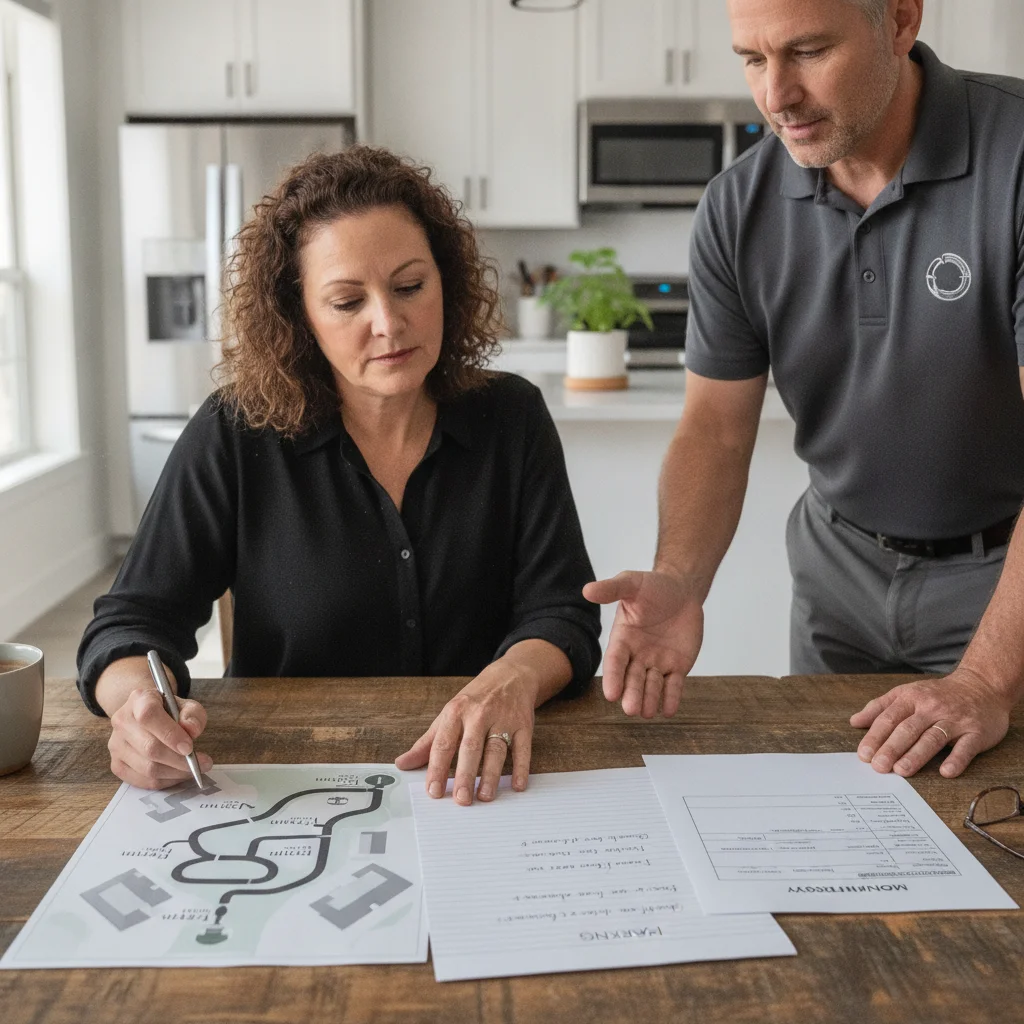
Create a simple access sheet with:
- The approved gate or entrance
- The contact responsible for entry
- The approved truck position
- Stairs and long carrying paths
- Narrow doors, turns, or covered areas
- A backup meeting point if entry fails
Avoid placing a private gate code on cartons or public notes. Send sensitive access details directly to the people who need them.
If a full-size truck can’t use the planned route, ask the moving company what alternatives it can provide. A different vehicle plan or added carrying distance may affect the scope and price. Get any revised terms from the mover in writing before approving them.
Our local moving service helps connect customers with permitted, insured independent movers. The mover you select will determine the truck, crew, and physical moving plan.
Plan parking without blocking shared streets
An open curb isn’t automatically an approved loading space. In 4S Ranch, the answer may depend on whether the street or parking area is managed by an association, property owner, or public authority. Confirm who controls the exact space before reserving or using it.
Ask the association or manager where the truck may stop. Mark that location on your access sheet. Don’t place cones, chairs, or signs in shared parking unless the responsible property contact allows it.
Keep neighboring driveways, emergency routes, mail areas, and waste collection points open. If another vehicle occupies the approved space, contact the person responsible for the property instead of directing the driver into an uncertain location.
The origin address needs the same attention. A smooth destination plan won’t help if loading starts with a blocked apartment lane or an unavailable parking area. Send the mover separate notes for both properties.
Plan the arrival sequence with the moving company. The resident or property contact should be ready to provide access and identify the approved stopping point. Keep the gate remote, key, or entry device with you. Don’t bury it inside a packed bag.
Tell nearby household members what the moving path will be. Keep personal vehicles and loose items away from that route. Pets and children should have a separate, supervised space while movers carry furniture through doors and shared areas.
Property parking rules weren’t confirmed as uniform across 4S Ranch. Check the current requirements with the association, property manager, landlord, or authority responsible for your specific space.
Keep family essentials outside the shipment
Access problems become harder when the items you need are already inside the truck. Pack a personal essentials bag that stays with you from departure through move-in.
Include keys, gate controls, identification, property paperwork, medications, chargers, and the contact information supplied by your association or manager. Keep lease documents or closing instructions available if they help establish your right to enter the property. Don’t place these items in a carton assigned to the mover.
Prepare separately for children and pets. Keep food, water, medication, comfort items, and basic cleanup supplies close by. Choose a secure room or another supervised location away from the carrying path. Tell the mover which door shouldn’t be opened.
Your first-night items also deserve a clear plan. Set aside bedding, toiletries, a change of clothes, basic kitchen items, and any equipment needed for work or school. Label the carton clearly if it will travel in the shipment, then tell the mover where you want it placed.
Keep valuable documents and small high-value items under your control. If an item needs special handling, identify it while discussing the move’s scope. Don’t wait until loading begins.
The access sheet should remain outside the shipment too. Save a digital copy and give the mover only the information needed for entry. If your phone loses power, a printed copy can preserve the entrance instructions and approved parking location.
These steps won’t replace the mover’s own plan. They help your household stay functional while the permitted moving company handles the physical work.
Verify the mover’s Cal-T number before booking
California household movers are regulated by the Bureau of Household Goods and Services, or BHGS. BHGS is part of the Department of Consumer Affairs. It took over household-mover regulation from the CPUC in 2018.
A household mover isn’t licensed through the Contractors State License Board. Don’t use a CSLB contractor search as proof that a moving company may transport household goods. Before booking, check the mover’s Cal-T number through the official BHGS household mover search.
Search the company you’re considering and review the agency record. If the business name or permit information is unclear, ask the mover to explain it and confirm the record with BHGS. Don’t rely only on a truck logo, advertisement, referral profile, or verbal statement.
You can also review the state’s consumer information for household moves. For more selection steps, use our guide to choosing a San Diego mover.
Ask the mover to put the agreed scope in writing. The access notes should cover the gate, approved parking position, carrying path, stairs, unusual items, and any property paperwork. If those details change, ask the mover whether the written scope or price must change before work begins.
Interstate moves follow a different regulatory system. If your shipment will cross state lines, check the mover through FMCSA’s Protect Your Move program and review its federal registration.
Master Movers San Diego doesn’t hold a BHGS household mover permit and doesn’t perform moves. We connect customers with permitted, insured independent moving companies. The company you book provides the crew, vehicle, estimate, and moving service.
When to call us
Call when a gate, private street, shared parking area, or tight carrying path makes professional planning part of the move. Master Movers San Diego can connect you with an independent company that handles the physical work. Call us at (858) 400-4069 and we’ll connect you with a permitted local mover.