Choosing among Rancho Bernardo movers starts with the property, not the truck. Association rules, downsizing decisions, storage gaps, and the I-15 route can all shape the plan. Confirm those details before comparing written estimates.
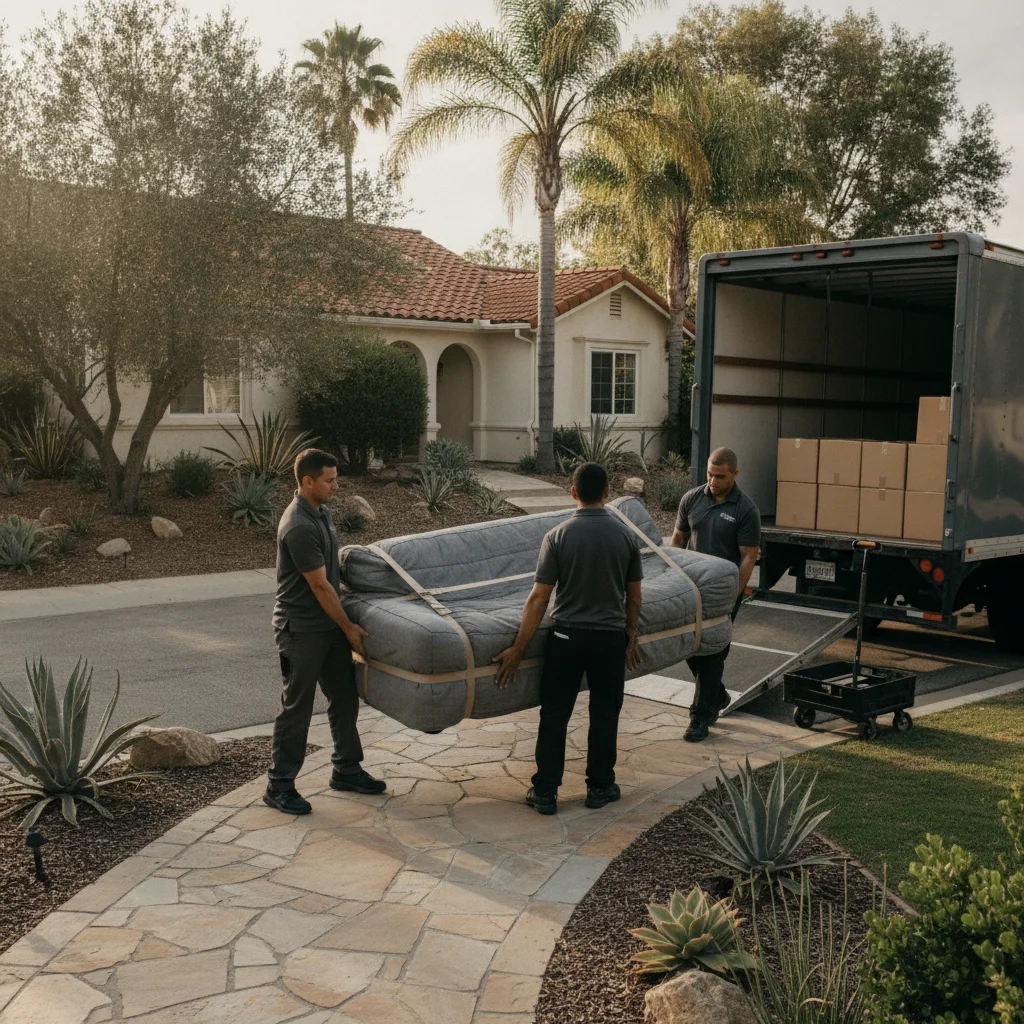
What a Rancho Bernardo move usually looks like
Rancho Bernardo sits along the I-15 corridor in inland North County. A move may involve a detached home, condominium, townhome, or active-adult community. Each property type creates a different access plan for the mover you hire.
Start with the path between the home and moving vehicle. Note gates, narrow walkways, stairs, elevators, and tight garage approaches. Tell the mover where loading can happen without blocking neighboring homes. Photos help explain conditions that aren’t clear from a street address.
The route deserves attention too. Rancho Bernardo Road, Bernardo Center Drive, and Pomerado Road connect different parts of the community with I-15. Share both addresses before booking so the mover can review the route and property access. Don’t assume a nearby destination means a simple loading day.
Inventory often becomes the bigger decision in a downsizing move. Separate furniture into items moving, staying, being donated, or needing storage. Measure large pieces against the new room and doorway dimensions. That work can prevent paying to move furniture that won’t fit.
For a move contained within San Diego County, review the available local moving options and describe every stop. A storage unit, donation center, or second residence changes the job plan. The written estimate should identify those stops and the services assigned to each one.
If you’re comparing Rancho Bernardo movers, compare the same job description each time. Give every company the same inventory, access notes, and destination details. That makes differences in the written estimates easier to understand.
Planned-community rules that show up on move day
Rancho Bernardo’s planned communities don’t share one moving policy. One association may have a gate procedure, while another may focus on parking or common-area protection. Ask the property manager what applies to your exact address.
Request the rules in writing when possible. Confirm approved moving hours, vehicle placement, gate access, elevator reservations, and any required certificate of insurance. Ask whether the association needs documents directly from the mover. Don’t treat a neighbor’s past experience as the current policy.
Walk the route from the vehicle to each room. Look for turns that may be difficult for a sofa, bookcase, or dining table. Note stairs, low branches, decorative gates, and shared hallways. Send clear photos to the mover before the estimate is finalized.
Active-adult communities can add another planning layer. A relative, representative, or organizer may be coordinating the move from another city. Decide who can approve inventory changes and answer access questions. Give that person the manager’s contact details and the mover’s written plan.
Common areas also need clear boundaries. Ask whether doors may be held open, where protective materials are required, and where packing debris may go. These aren’t universal Rancho Bernardo rules. They’re questions for the association or property manager.
Before booking, identify who will provide gate access at both ends. Confirm where the moving vehicle may wait if that person isn’t present. Written instructions reduce confusion when multiple family members, managers, and movers are involved.
Long-distance departures from inland North County
For long-distance moving from Rancho Bernardo, separate route planning from carrier verification. The origin still needs a local access plan. The destination may add building reservations, parking limits, storage, or a delayed delivery arrangement.
First determine whether the shipment remains inside California. California household movers are regulated by the Bureau of Household Goods and Services, or BHGS. You can check a mover’s license status through the official BHGS Household Mover License Search. A California mover isn’t licensed through the CSLB.
A shipment crossing a state line falls under federal FMCSA regulation. Review the carrier through FMCSA’s Protect Your Move and confirm its USDOT registration. The legal business name on the registration should match the documents you receive.
Federal rules require an interstate estimate to notify the shipper about Full Value Protection and Released Value. Released Value limits the mover’s liability to 60 cents per pound per article and carries no charge. Full Value Protection uses a minimum valuation of $6 per pound times the shipment weight, although a mover may use a higher minimum. These federal figures don’t apply to a move that begins and ends in California.
For interstate shipments, list any article worth more than $100 per pound in writing. Federal rules allow a mover to limit liability when the shipper doesn’t provide that written notice. Ask how the mover wants high-value items documented before pickup.
Inventory accuracy matters throughout this process. Record which items are moving, which need special handling, and which won’t be shipped. Keep copies of the estimate, inventory, valuation election, and delivery terms where you can reach them during the move.

Storage between dates and what it adds
Storage becomes relevant when the old home closes before the new one is ready. It may also help when downsizing decisions aren’t finished. The right arrangement depends on the gap, inventory, access needs, and who will handle each transfer.
Start by deciding whether the shipment stays with one mover or changes hands. Ask who inventories the goods, where they’ll be stored, and how the final delivery gets scheduled. The written estimate should separate transportation, handling, and storage terms.
Storage can add another loading stage. That means the mover needs to know which items must remain accessible. Pack medication, documents, keys, and immediate household needs separately. Don’t place anything essential deep inside a stored shipment.
Our guide to overnight storage between move dates explains the handoff questions in more detail. You can also review storage services when comparing arrangements for a Rancho Bernardo move. Confirm pricing and access rules directly with the mover or storage provider. No single storage price applies to every shipment.
A portable container creates a different access issue. For a Rancho Bernardo address inside the City of San Diego, a container placed in the public right-of-way requires a Traffic Control Permit. The city’s storage container permit bulletin says applicants must provide at least three working days’ notice. The permit can run up to seven days.
That city bulletin covers streets and sidewalk areas, not private driveways. An association may still have separate rules for driveway placement. Confirm those terms with the property manager before ordering a container.
Booking questions that keep the day on schedule
A useful estimate starts with complete information. Give each mover the same inventory and access notes. Then ask direct questions that connect the written agreement to the actual job.
Questions worth asking include:
- What legal business name appears on the estimate and license record?
- Who will perform the move and handle the shipment?
- Does the estimate include every address, stop, and storage handoff?
- How should stairs, gates, elevators, and long walkways be documented?
- What association documents must be completed before arrival?
- How are added items or changed access conditions handled in writing?
- For an interstate move, what delivery terms and valuation options apply?
Confirm the mover’s BHGS license for a California-only household move. For an interstate shipment, check its FMCSA registration too. These are different regulatory systems. A mover may have authority for one type of move without having authority for the other.
Ask for proof of insurance when an association requires it. Confirm whether the property manager must receive the certificate directly. The association sets its own acceptance process, so the mover shouldn’t be expected to guess it.
Review the estimate line by line. The addresses, inventory, access conditions, packing responsibilities, storage plan, and payment terms should match the move you described. Ask the mover to explain unclear language before signing.
Decide who can make changes during the job. That matters when adult children, property managers, or several household members are involved. The mover should know which person can approve an inventory or destination change.
If you found the company through a search for Bernardo moving and storage, don’t rely on the name alone. Verify the legal business, license status, and written scope. Similar names don’t establish that two companies are connected.
Keep the final documents together. Include gate instructions, association contacts, the inventory, and the signed estimate. Share access information only with the people who need it.
When to call us
A professional crew makes sense when the move involves association access, heavy furniture, multiple stops, storage, or an interstate destination. Call us at (858) 400-4069 and we’ll connect you with a licensed local mover.